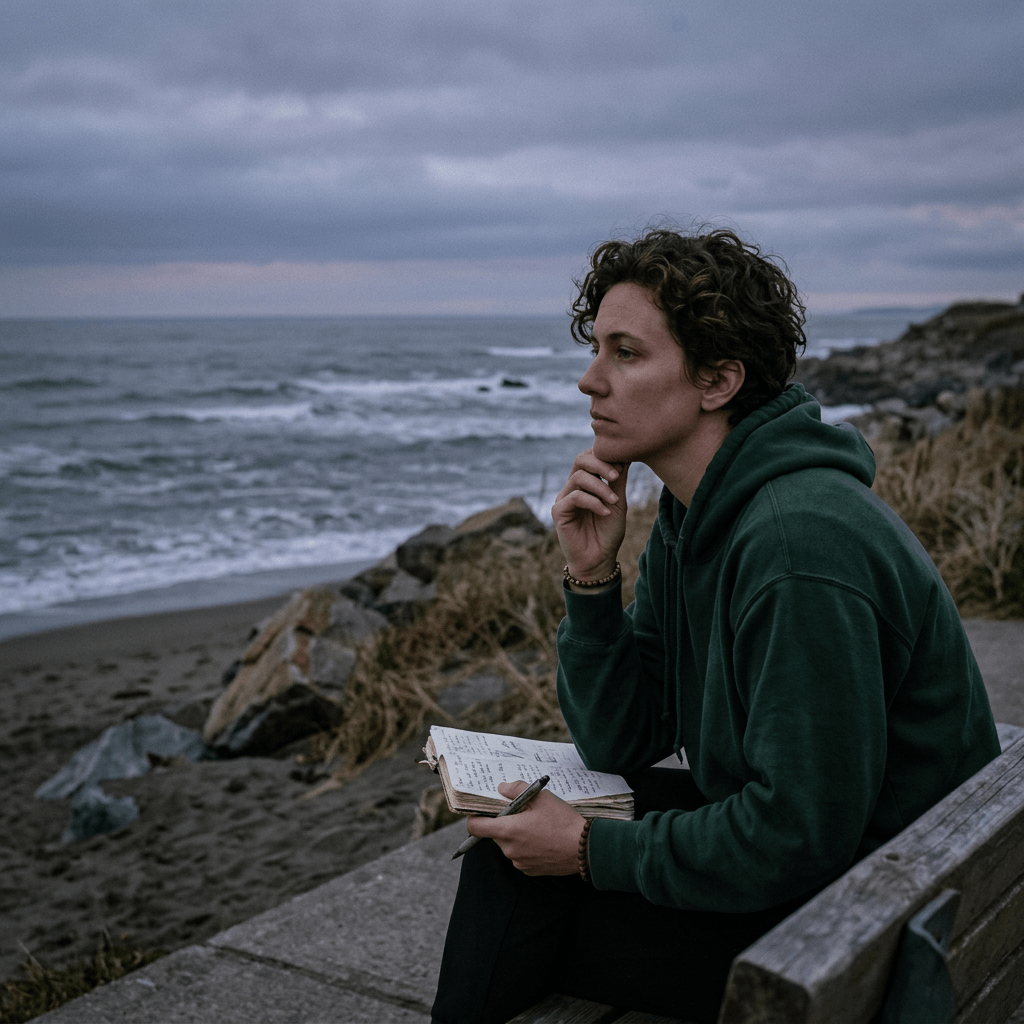
Mental health is a subject that deserves our attention. We often think about healing in terms of therapy, medication, meditation, or different healing practices. While all of these approaches have value, I believe there is another question we should ask before beginning any healing journey:
Who are we?
For more than ten years, I have returned to a book that has had a profound influence on the way I think about this question: The Book of Not Knowing. Every time I open it, I am reminded of the importance of authenticity and the nature of being.
One of the central questions the book asks is remarkably simple:
What is being?
To answer that, I think we first need to understand the difference between the self and being.
The Self and Being
The self is a collection of characteristics, memories, beliefs, experiences, and roles that come together to create an idea of who we are—or perhaps more accurately, who we think we are.
I think that distinction is important.
Being, on the other hand, is intrinsic. It is what you truly are, independent of labels, achievements, or the stories you tell yourself.
A plant is intrinsically a plant. It cannot be anything else. A book is a book. An orange is an orange.
These things simply are what they are.
Human beings are different because we have the remarkable ability to identify ourselves with ideas. We can identify with our profession, our past, our successes, our failures, or even our fears. Sometimes we become so attached to these identities that we begin to mistake them for who we truly are.
The Importance of Authenticity
Authenticity means allowing yourself to be what you already are.
You cannot truly become someone else.
Yet many of us spend years trying to do exactly that. We compare ourselves with others, try to meet expectations that are not our own, or create identities that move us further away from our authentic nature.
I believe that this distance from our true being can contribute to stress, frustration, emotional pain, and many of the struggles that affect our mental health.
The more disconnected we become from ourselves, the more difficult it can be to experience genuine peace.
Healing Begins with Understanding
So how do we begin to heal?
I think the first step is understanding the difference between the self and being.
Whatever path of healing we choose—whether it is meditation, therapy, neuroscience, philosophy, or another practice—it helps to approach that journey with a deeper understanding of who we really are.
Not from the perspective of our labels.
Not from the perspective of our intellect.
But from the perspective of being itself.
For me, that is where healing truly begins.
A Passage Worth Reflecting On
One sentence from The Book of Not Knowing has stayed with me for many years:
“Being is what we really are. It is what is simply so.”
Every time I read those words, I pause.
They remind me that perhaps the purpose of life is not to become someone else, but to discover what has always been there.
Our Roles Are Not Our Identity
Of course, we all have roles in society.
We become doctors, teachers, lawyers, pilots, artists, surfers, or countless other things. These roles are important because they help us function in the world and communicate with one another.
But they are still roles.
They are not the essence of who we are.
There is a deeper part of ourselves that exists before every title, every profession, and every label.
Perhaps that is our true being.
Final Thoughts
These are simply some of my reflections, and I am grateful to have a place where I can share them with you.
My hope is that this space becomes a community where we can explore consciousness, authenticity, and the human experience together—not by pretending to have all the answers, but by asking better questions.
A Question to Reflect On
If you removed every label you use to describe yourself—your profession, your achievements, your past, and even your beliefs—who would you be?

