Tag: mental-health

  • Neurobiology of Yoga Practice

    Neurobiology of Yoga Practice

    Hello there, and welcome back!

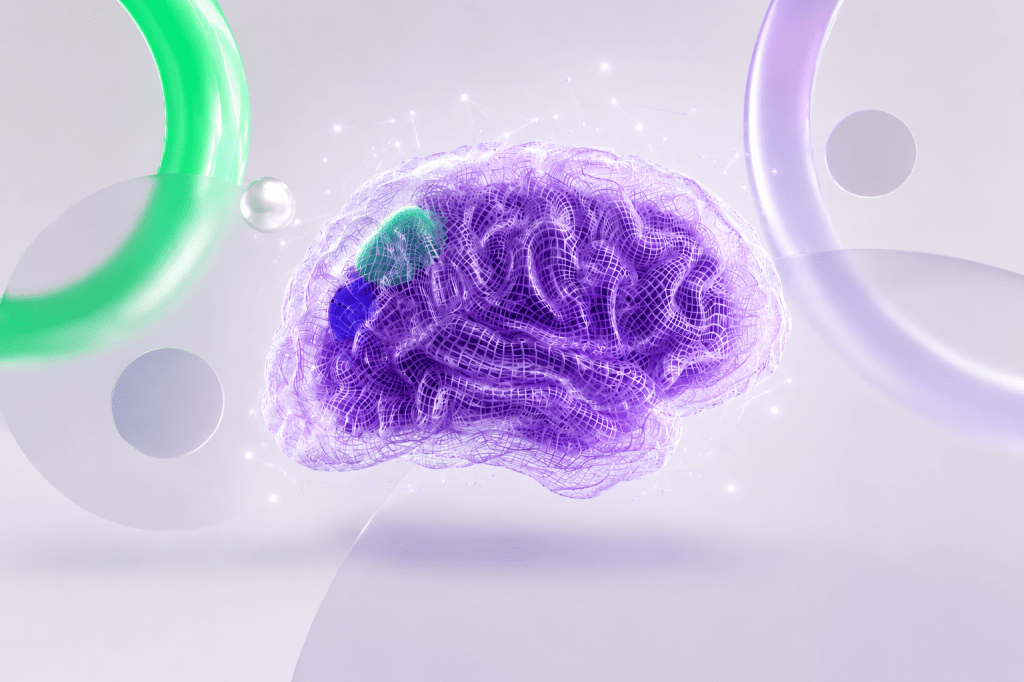
    Today I would like to explore a fascinating subject: The Neurobiology of Yoga Practice.

    Yoga and cognition have been studied for decades. Yet with remarkable advances in neuroscience and brain imaging, we are beginning to understand something that the ancient yogis seemed to discover long before modern science.

    This millennia-old practice, once viewed primarily as a spiritual discipline, is now being investigated as a neurobiological process. The more science learns about the brain, the more it appears to validate many of the principles that yoga has taught for thousands of years.

    Scientific research is based on observation, measurement, analysis, and experimentation. Yoga follows a similar path, but with one profound difference: in Yoga, you are both the scientist and the experiment. You do not need a laboratory because the laboratory is your own body, your own mind, and your own nervous system. Every breath, every emotion, every reaction, and every sensation becomes data.

    As you begin observing that data from within, you realize that yoga is not about touching your toes or mastering difficult postures. It is about understanding what is touching you emotionally, mentally, energetically, and spiritually.

    Many people today see yoga simply as physical exercise, a way to stretch, relax, or stay fit. But Yoga, in its true essence, is infinitely deeper.

    One of my teachers once shared something that has remained with me ever since. He said, “The first Yoga Sutra is Atha Yoga Anushasham, and the second is Yoga Citta Vritti Nirodhah. When you come to Yoga, you arrive somewhere between those two.”
    Yoga may begin with the body and the breath, but eventually it moves inward toward stillness, between effort and surrender, discipline and letting go.

    Maharishi Patanjali defined Yoga as the calming of the fluctuations of the mind. The goal is not to eliminate thought but to stop becoming imprisoned by it. He also described the five Kleshas: Avidya, Asmita, Raga, Dvesha, and Abhinivesha, which can be understood as mental filters that distort our perception of reality.

    Modern neuroscience recognizes similar patterns. Stress, anxiety, and repetitive emotional habits strengthen neural pathways through neuroplasticity. Fortunately, neuroplasticity also offers hope.

    Through mindfulness, conscious breathing, and meditation, those pathways can gradually change and new ones can emerge (Lazar et al., 2005; Tang, Hölzel, & Posner, 2015).

    Patanjali’s concepts of Samskaras and Vasanas resemble deeply ingrained patterns of neural activity. When we observe thoughts instead of automatically reacting to them, regions such as the prefrontal cortex help regulate emotional responses from the amygdala, a process known as topdown regulation (Goldin & Gross, 2010; Hölzel et al., 2011).

    Pranayama, the conscious regulation of breath, influences the autonomic nervous system through mechanisms that include vagal activity. Slow breathing has been associated with improved heart rate variability, reduced stress, and enhanced parasympathetic regulation (Jerath et al., 2015; Lehrer & Gevirtz, 2014).

    Meditation also changes measurable brain activity. EEG studies often demonstrate increased alpha and theta rhythms associated with relaxed attention (Cahn & Polich, 2006). MRI studies have reported greater cortical thickness in experienced meditators, particularly within the prefrontal and insular cortices, areas involved in attention, self-awareness, and emotional regulation (Lazar et al., 2005). Long-term meditation has also been associated with healthier cognitive aging and preservation of gray matter (Luders et al., 2015).

    To me, this is where the ancient wisdom of Yoga and modern neuroscience meet. What Patanjali expressed through philosophy can increasingly be explored through scientific observation. Yoga was never about blind belief. It has always been an inner science, an exploration of consciousness through direct experience. Neuroscience now provides another lens through which we can appreciate that journey.

    The mystical and the measurable are finally meeting in the same breath. To me, that is the science of Yoga. My own Ambrosia.

    Selected References

    Lazar SW et al. (2005). Meditation experience is associated with increased cortical thickness.

    Tang YY, Hölzel BK, Posner MI. (2015). The neuroscience of mindfulness meditation.

    Hölzel BK et al. (2011). Mindfulness practice leads to increases in regional brain gray matter

    density.

    Goldin PR, Gross JJ. (2010). Emotion regulation and mindfulness.

    Jerath R et al. (2015). Physiology of long pranayamic breathing.

    Lehrer PM, Gevirtz R. (2014). Heart rate variability biofeedback.

    Cahn BR, Polich J. (2006). Meditation states and traits.

    Luders E et al. (2015). Brain anatomy of meditation practitioners.

  • All I Need

    All I Need

    What do I really need?

    It is such a simple question, yet sometimes it takes decades to discover the answer.

    For me, that question began around 1999.

    Several evenings each week, after work, I would ride the 7 train into Grand Central and transfer to the downtown 6 train on my way to Baruch College. My employer had enrolled me in a Project Management certification program, and I was determined to succeed. At that point in my life, I was completely in career mode. I believed that every certification, every class, and every accomplishment would move me closer to the life I wanted.

    Like so many New Yorkers, I escaped the noise of the subway by putting on my headphones. Back then I carried a bright yellow Sony Sports Walkman, the splash resistant cassette player that seemed to go everywhere with me. I loved that little Walkman. As the train rattled through the tunnels beneath Manhattan, I would press play, shutting out the screech of the rails, the station announcements, and the endless rhythm of the city. One song seemed to accompany me on almost every ride: All I Need by Matchbox Twenty.

    As I listened, I found myself asking a question that I could never quite answer.

    What do I really need?

    At the time, I believed the answer was simple. I needed more education, another certification, more experience, and a better career. I believed that if I kept climbing, eventually I would arrive somewhere that felt complete.

    One evening during class, our professor asked a question that has stayed with me ever since.

    “What does a project need in order to be successful?”

    My classmates talked about planning, budgets, schedules, communication, stakeholders, and deliverables. Every answer was technically correct.

    Then it was my turn.

    I remember saying that before any project could truly be successful, it first had to satisfy the needs of the individual managing it.

    Several classmates disagreed. They argued that the purpose of a project is to satisfy the stakeholders, not the project manager. Looking back, I understand why they challenged me. The truth is that I could not fully explain what I meant either.

    I only knew it felt true.

    What I wanted to say, but did not yet have the words for, was that if the person leading the project is disconnected from themselves, no amount of planning will ever create a meaningful life. You can complete the project, deliver it on time, stay within budget, and receive recognition, and still feel that something is missing.

    At the time, I could not explain it.

    Today, almost three decades later, I finally can.

    I completed the certification. I passed the exam. I became a certified project manager. For years I managed successful projects. They were completed on schedule, within budget, and according to plan. From the outside, everything looked successful.

    Inside, however, something felt deeply out of place.

    It was not because I disliked the work, and it was not because I was not good at it. It was because I felt trapped. I was living inside a system that rewarded results but rarely asked whether the person producing those results was truly alive inside.

    Little by little, I realized that what I had been searching for on those subway rides was not another credential. It was not another promotion. It was not another title.

    What I was searching for was freedom.

    Freedom to make decisions that reflected my own values.

    Freedom to create instead of simply execute.

    Freedom to explore questions that fascinated me instead of only solving problems that belonged to someone else.

    Freedom to build a life instead of merely building a career.

    Looking back, I realize that the young woman sitting on that subway was not really asking, “What career do I want?”

    She was asking a much deeper question.

    “What kind of life do I want?”

    The answer had been quietly following me all along, hidden inside a song playing through that bright yellow Sony Sports Walkman.

    Today, when I ask myself the same question that I asked on those subway rides so many years ago, the answer is finally clear.

    What do I really need?

    Freedom.

    Not freedom from responsibility.

    Not freedom from work.

    But the freedom to live according to my own beliefs, to continue learning, to continue creating, and to wake up each morning knowing that the life I am living is truly my own.

    It took years, mistakes, careers, successes, disappointments, and countless rides through New York City to understand that.

    Sometimes the greatest project we will ever manage is not the one assigned to us by an employer.

    It is the lifelong project of discovering who we really are.

  • Mental Health Begins with Being

    Mental Health Begins with Being

    Mental health is a subject that deserves our attention. We often think about healing in terms of therapy, medication, meditation, or different healing practices. While all of these approaches have value, I believe there is another question we should ask before beginning any healing journey:

    Who are we?

    For more than ten years, I have returned to a book that has had a profound influence on the way I think about this question: The Book of Not Knowing. Every time I open it, I am reminded of the importance of authenticity and the nature of being.

    One of the central questions the book asks is remarkably simple:

    What is being?

    To answer that, I think we first need to understand the difference between the self and being.

    The Self and Being

    The self is a collection of characteristics, memories, beliefs, experiences, and roles that come together to create an idea of who we are—or perhaps more accurately, who we think we are.

    I think that distinction is important.

    Being, on the other hand, is intrinsic. It is what you truly are, independent of labels, achievements, or the stories you tell yourself.

    A plant is intrinsically a plant. It cannot be anything else. A book is a book. An orange is an orange.

    These things simply are what they are.

    Human beings are different because we have the remarkable ability to identify ourselves with ideas. We can identify with our profession, our past, our successes, our failures, or even our fears. Sometimes we become so attached to these identities that we begin to mistake them for who we truly are.

    The Importance of Authenticity

    Authenticity means allowing yourself to be what you already are.

    You cannot truly become someone else.

    Yet many of us spend years trying to do exactly that. We compare ourselves with others, try to meet expectations that are not our own, or create identities that move us further away from our authentic nature.

    I believe that this distance from our true being can contribute to stress, frustration, emotional pain, and many of the struggles that affect our mental health.

    The more disconnected we become from ourselves, the more difficult it can be to experience genuine peace.

    Healing Begins with Understanding

    So how do we begin to heal?

    I think the first step is understanding the difference between the self and being.

    Whatever path of healing we choose—whether it is meditation, therapy, neuroscience, philosophy, or another practice—it helps to approach that journey with a deeper understanding of who we really are.

    Not from the perspective of our labels.

    Not from the perspective of our intellect.

    But from the perspective of being itself.

    For me, that is where healing truly begins.

    A Passage Worth Reflecting On

    One sentence from The Book of Not Knowing has stayed with me for many years:

    “Being is what we really are. It is what is simply so.”

    Every time I read those words, I pause.

    They remind me that perhaps the purpose of life is not to become someone else, but to discover what has always been there.

    Our Roles Are Not Our Identity

    Of course, we all have roles in society.

    We become doctors, teachers, lawyers, pilots, artists, surfers, or countless other things. These roles are important because they help us function in the world and communicate with one another.

    But they are still roles.

    They are not the essence of who we are.

    There is a deeper part of ourselves that exists before every title, every profession, and every label.

    Perhaps that is our true being.

    Final Thoughts

    These are simply some of my reflections, and I am grateful to have a place where I can share them with you.

    My hope is that this space becomes a community where we can explore consciousness, authenticity, and the human experience together—not by pretending to have all the answers, but by asking better questions.

    A Question to Reflect On

    If you removed every label you use to describe yourself—your profession, your achievements, your past, and even your beliefs—who would you be?